
Wilmington Resident Lookup Coverage
Each Wilmington record answers a different kind of question. The Wilmington Online Assessment Database names the current assessed owner and pinpoints the property. A Middlesex North recorded instrument shows whether a deed backs that ownership up. The Town Clerk keeps local election materials and the annual census or street list. The statewide address tool returns only precinct information, though. Court and vital records earn their keep for names, events, and dates. They do not prove anyone currently lives at an address.
| Record | What It Confirms | Where | Access |
|---|---|---|---|
| Vision assessment record | Current assessed owner, parcel, and situs address | Wilmington Vision database | Public web access; record the fiscal year |
| Recorded land instrument | Parties, recording date, book/page, and legal description | Middlesex North Registry | Online viewing, with copy routes through the Registry |
| Local voter or numbered resident list | Publicly available fields for a stated list year | Wilmington Town Clerk | Local request or statutory inspection, with protected fields removed |
| MassCourts docket | Public case, party, status, and docket activity | Massachusetts Trial Court Case Access | Remote limits apply; clerk files remain authoritative |
| Vital index or certificate | Historical life event or relationship evidence | Town Clerk, RVRS, or Massachusetts Archives | Access depends on date, record type, and eligibility |
Pick the narrowest source that fits. A parcel question starts with the assessor and the Registry. An old name may live in the Wilmington Memorial Library or the Massachusetts Archives instead. Want a public voter list? Ask the local election office directly, not the statewide precinct tool. Working this way turns a Wilmington resident lookup into a dated trail rather than a pile of unrelated name hits.
Match a Wilmington Resident Name
Start by copying the name exactly as printed. Add middle initials, suffixes, alternate spellings, and the era being tested. Same-name matches happen constantly. A 1931 directory entry, an FY26 assessment record, and a recent docket are separate slices of time. Never merge them into one claim. A second identifier must tie them together. Use a parcel, a date, a record number, or a source-specific address.
For anyone tied to property, set the assessor's owner field beside a Middlesex North Registry instrument. The Registry lists grantors and grantees. That means sellers and buyers. Its legal description may not match a modern street address. For historical names, the Wilmington Memorial Library local-history collection offers town reports, maps, Town Crier material, and the Wilmington History Index. Label each result honestly. Call it an owner, an occupant as printed, an official record, a court party, or a historical mention. Never assume every name is a current resident.
- Keep the exact spelling, search date, and source URL with every result.
- Use a date range before treating two matching names as one person.
- Preserve the source's role label, such as owner or party to a case.
- Describe a negative result by the portal, search term, filters, and date searched.
Read Wilmington Resident Court Dockets
Massachusetts Trial Court Case Access starts with Court Department and Court Division. It sometimes needs the right Court Location too. A Wilmington matter may sit in Woburn District Court. Or it may sit in the appropriate Lowell court, depending on case type. The public interface offers Name, Case Type, Case Number, and Ticket or Citation Number tabs. Civil name searches require a last name of at least two characters. They also need a first name of at least one. Case-number searching demands exact capitalization, spaces, and leading zeros.
| MassCourts Field | Use | Format or Limit |
|---|---|---|
| Court Department and Division | Set the court system and division | Required before the relevant choices populate |
| Court Location | Choose the correct local court | May auto-populate after division selection |
| Name tab | Search a civil party name | Last and first name are required for that path |
| Case Type and Status | Narrow a name result | Optional, department-specific choices |
| Date ranges | Reduce a broad result set | Use MM/dd/yyyy; case-type searches have a 30-day range limit |
| Case Number | Retrieve a known case | Exact value required for that tab |
The official docket-search instructions walk through the portal choices and how to navigate results. A docket on screen may list party name and type, case and docket number, and court division. It may also show case type, file date, status, hearings, events, and dispositions. Document images are not always available remotely. Call the clerk before visiting. A public-access terminal can show more than the web result.
Public docket result inventory
- Party name and party type, plus related case or case number when shown.
- Court department and division, case category, file date, and status.
- Docket events, dispositions, and calendar or hearing information.
- Attorney information or a self-represented mailing address only when the public result displays it.
- Document availability, noting that a visible docket does not guarantee a remotely available image.
The MassCourts public-search interface displays the search screen used for a Wilmington resident lookup involving an eligible court matter.
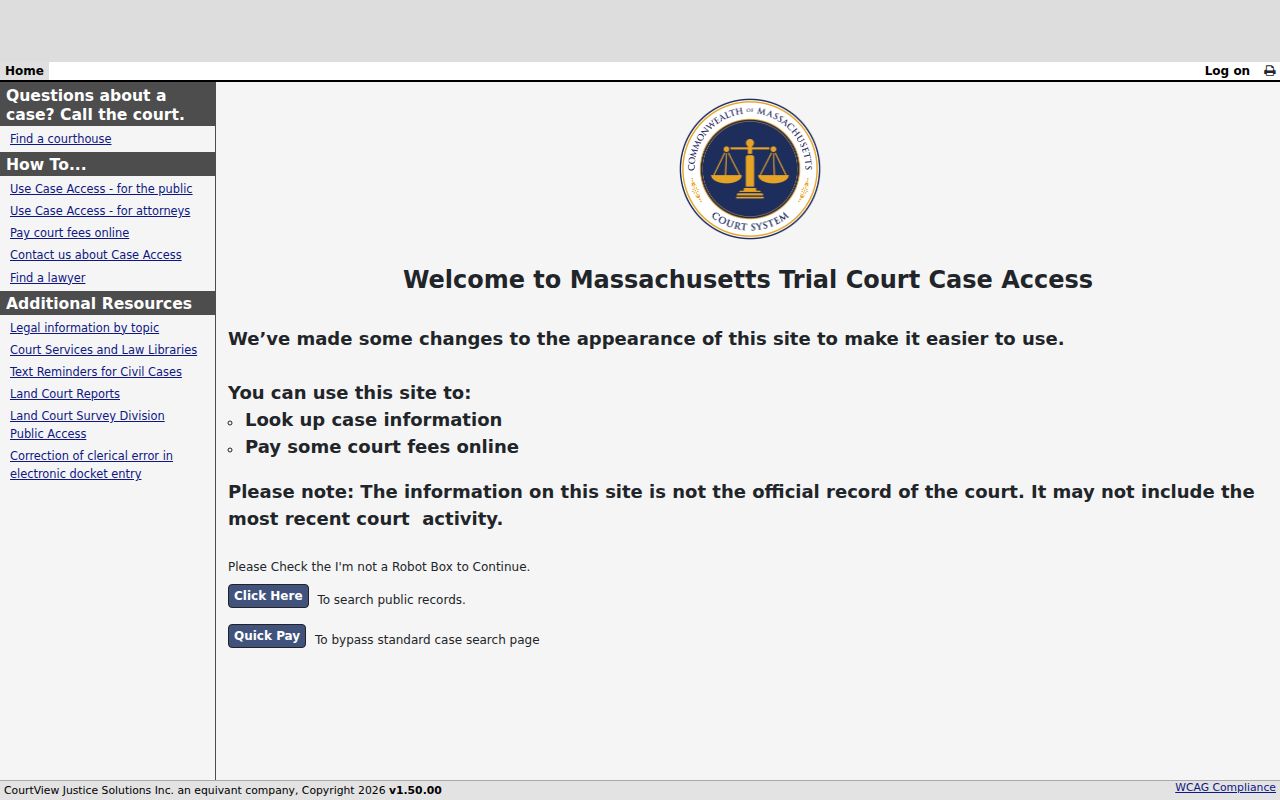
Read any result by case number and the status shown. A docket can establish that a public case exists. A name match alone establishes nothing about identity or present residence.
Wilmington Resident Voter Boundaries
The Secretary of the Commonwealth's Find my election information form takes a street number, street name, street suffix, and Wilmington or a five-digit ZIP. It returns election and precinct information for that address. It is not a name-by-address roster. For a local voter list, ask the Wilmington Town Clerk or registrars about the year, fields, format, inspection rule, and fee.
The state voter-information access guide separates public fields available through local records from nonpublic data such as phone, email, veteran status, permanent-absentee status, and confidential-voter details. The annual numbered resident list under M.G.L. c.234A, §10 is a distinct record, built from the January 1 resident count and governed by its own inspection procedure. Neither list proves a person voted in every election or still lives at the printed address. The official address and precinct lookup shows the fields needed to route a Wilmington address to the right election information.
Use the tool to confirm precinct routing, then pursue any permitted local list through the Town Clerk. Keep the precinct result separate from any conclusion about identity or residence. Note: A statewide voter file is not an open general-purpose name lookup, so local election records require the local access route.
Verify a Wilmington Resident
Verification starts with a dated record. Then test it against a source with a different purpose. An assessed owner, for example, can be checked against a recent recorded Wilmington deed. If a date or name does not align, keep the disagreement rather than forcing a match. Never force a fit. Historical vital records can support a relationship or an event, but they cannot turn an old address into a claim of current residence.
- Normalize the name, including middle initial, suffix, spelling variants, and the date range being tested.
- Search Vision for a parcel or owner record and record its fiscal year, parcel ID, situs address, and displayed owner field.
- Search Middlesex North by the same name and town, checking grantor and grantee variants, recording date, document type, book/page, and legal description.
- Use MassCourts only for a lawful, relevant public docket check. Compare a displayed address only when the docket makes it public and another identifier supports the match.
- Request a certificate or clerk-file copy from the legal custodian only when the remaining question requires one and access rules allow it.
- Docket
- The court's running case record, listing case details, events, and status. It is not the same as every document in the file.
- Index and image
- An index helps locate a record by fields such as name or date. An image is the scanned document, which may have separate viewing rules.
- Certified copy
- A copy issued by the official custodian with its certification. It is obtained through the office's stated request channel and fee rules.
Two sources will sometimes disagree. Write both statements down with their dates. A mismatch can reflect a different role, a later change, a spelling variation, or a source that names a different person entirely.
Wilmington Resident Vital Requests
Vital records confirm life events and relationships. They also anchor a historical residence in Wilmington. The Town Clerk issues local certified copies when the event sits in its custody. A birth request form asks for the child's name and date. It also wants parent names, copies, requester contact details, and a signature. Restricted birth records require identification and an authorized relationship. Marriage requests follow the town where intentions were filed. A death certificate may sit where the death occurred. It may also sit where the decedent resided in Massachusetts. The state registry holds a third copy.
Two channels are documented. The Town Clerk's mail-order instructions cover local requests. Local certified birth, marriage, and death copies are listed at $10. The Massachusetts Registry of Vital Records and Statistics maintains 1936-present records. Its mail form calls for an application, photo identification, and a return envelope. The fee is $32 per copy, or $42 expedited. The Massachusetts Archives provides historical indexes and digital-record routes for the earlier state series. Birth and marriage records over 90 years old are generally open for historical use. Death records over 50 are too. Access is still subject to restricted categories and later amendments.
One more state page helps. The state vital-record ordering page lists the required identity, eligibility, date, and place details. A request is sent once those are in hand. Gather those details first.
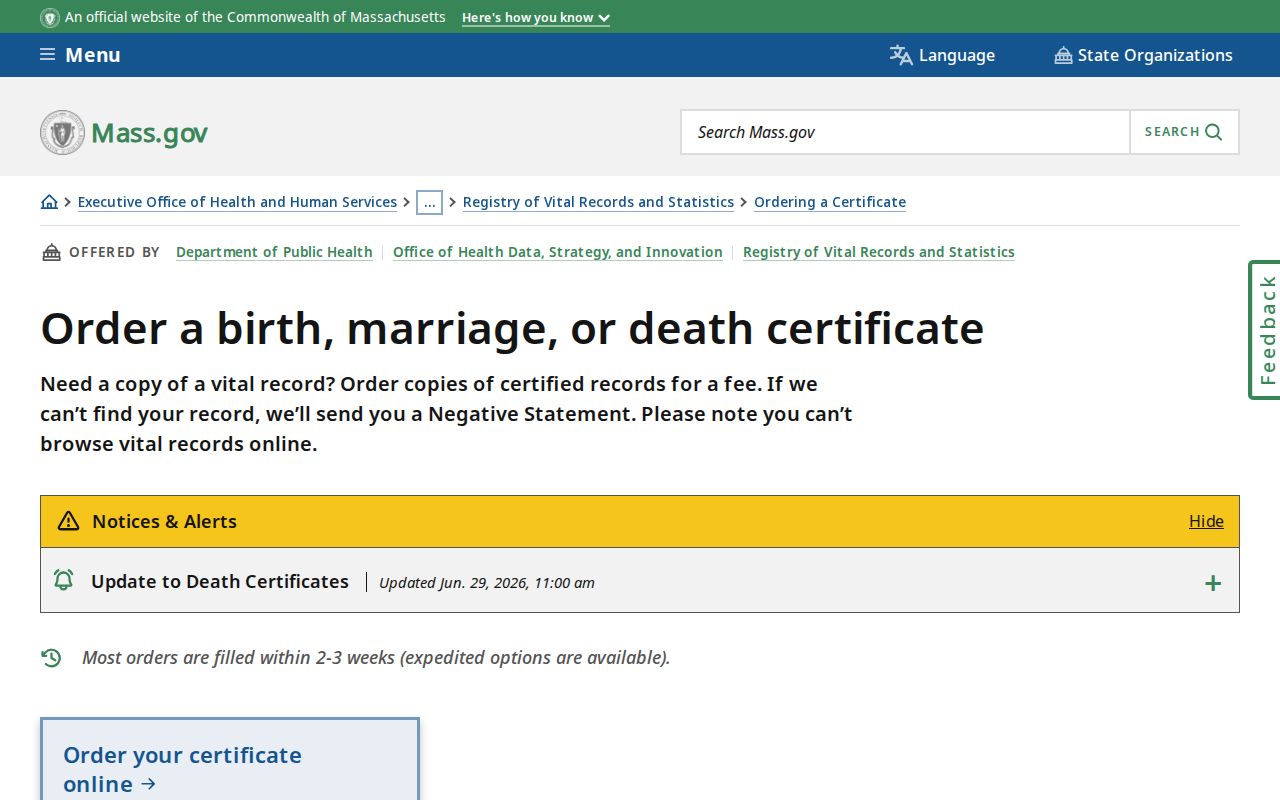
This page handles vital record orders rather than a Wilmington resident lookup for where someone lives now. The event custodian matters, so confirm which office holds the record before requesting it.
Note: Restricted details, such as specially limited death-record SSN information, never belong in a residents directory entry.
Separate Wilmington Resident Roles
Business and credential results can separate two people with similar names. But they describe a role, not a home address. Wilmington business certificates are town filings. The Massachusetts corporate search can show entity, officer, registered-office, agent, and filing information. The occupational-license search shows credential, status, dates, and board. Each item needs a source date. Labels must match the record itself.
Use these searches only when a public, dated role resolves an identity question. A registered agent address, license city, business principal, or assessed personal-property record does not prove residence. A separately dated property, local list, or historical source is still needed for a narrower Wilmington resident conclusion.
Log a Wilmington Resident Search
Useful negative results preserve what was actually tested. Record the portal, the exact term and spelling variants, the date range, filters, result count when visible, and the access date. A "not found" result is narrow. It covers only the conditions you used. It does not prove a person never lived in Wilmington, or that a restricted record stays sealed.
Dates prevent false continuity. A local history entry, a voter list for a stated year, a FY26 assessment record, and a current docket each carry different dates and custodians. Older names need pairing. Combine the library's town-report and history-index material with a record whose date is known. The Wilmington City Directory route works well for historical collection work. A past printed entry is not a current address.
Note: Keep the source type, document or case number, record date, and access date together so another researcher can repeat the check.
Request Wilmington Resident Records
Some municipal records have no open search. Ask the custodian directly. Wilmington follows the Massachusetts Public Records Law, M.G.L. c.66, §10, with exemptions principally in M.G.L. c.4, §7(26). Name the records, the date range, the department or custodian, the preferred format, and requester contact information. A name-only request guarantees nothing. Not every town department will hold responsive records.
The Wilmington Records Access Officer information and request form route municipal inquiries to the right department. The town's form describes a 10-business-day framework for identifying responsive records, noting exemptions or redactions, estimated fees or timing, and appeal information. Court files follow court access rules instead.
Wilmington Resident Lookup Limits
Massachusetts keeps certain details out of public view. Confidential voter data, restricted vital records, and sealed or impounded court files stay off limits. Juvenile matters are protected too. The same goes for addresses enrolled in the Massachusetts Address Confidentiality Program, which gives participants a substitute address. Never try to rebuild a shielded location from neighboring parcels, mailing fields, or a chain of lookup results. When a field is withheld, the law withholds it. Leave it alone.
Labels also matter more than people assume. Owner, occupant, voter, business principal, court party, and relative are not the same thing. A property map is not a deed. A docket entry is not a certified disposition. A ZIP code is not a municipal boundary either. If a Wilmington record looks wrong or incomplete, ask the records custodian about correction, redaction, sealing, or official error instead of stretching a record's meaning or filling gaps with an unofficial profile.
Lawful use. Wilmington resident lookup records support personal, lawful research and historical questions. Do not use any record to stalk, harass, intimidate, or expose a protected person.