
Wilmington City Directory Holdings
The State Library inventory is the safest starting point for the known Wilmington printed volumes. It identifies city-directory holdings for 1919 and for 1931-1932. It also identifies separate Wilmington voting-list years. Those lists are collection locators, not proof that every volume has a public page image or that the volumes form a continuous run. Wilmington Memorial Library adds another long series: digitized annual reports and persons-listed material displayed from 1829 through 2022. The Historical Society's digital library is a distinct collection, not a replacement for a printed directory.
| Collection | Years | Where Held | Access |
|---|---|---|---|
| Wilmington city-directory holdings | 1919; 1931-1932 | Massachusetts State Library inventory | Use the State Library catalog or reference service to confirm format, reproduction, or onsite access. |
| Wilmington voting-list holdings | 1924, 1938, 1945-1949, 1952-1954, 1966, 1980, 1989, 1992, 2012 | Massachusetts State Library inventory | Historical list locator; not a complete resident roll. |
| Town reports and persons-listed material | 1829-2022 displayed | Wilmington Memorial Library | Digitized browse ranges, with local-history help for a specific volume or page. |
| Historical Society Digital Library | Dates vary by item | Wilmington Historical Society | Free keyword, Boolean, exact-match, item, file, and collection searching. |
Start with the official State Library holdings inventory. The inventory verifies the known years, but research did not locate an official open viewer containing a preselected 1919 or 1931-1932 Wilmington directory page.
Note: A missing year in these holdings is a collection gap, not evidence that no Wilmington household or business existed that year.
Wilmington History Index Searches
The Wilmington Memorial Library local-history collection provides a more flexible starting point when a printed volume year is absent. Its links include the Wilmington History Index, local photographs, maps, Sanborn fire-insurance material, Town Crier files, Olde Burying Ground material, town books, named collections, annual reports, and persons-listed volumes. The history index is a bridge to people and subjects, not a current directory. Record the exact index term, source title, date, page, and whether the result refers to a report, newspaper item, photograph, or manuscript.
The library's regular hours were listed in the research as Monday through Thursday from 9:00 a.m. to 8:30 p.m., Friday and Saturday from 9:00 a.m. to 5:00 p.m., and Sunday closed. Confirm those hours before a visit. When a digital item does not expose the needed year, reference staff can check physical directories, yearbooks, obituary files, microfilm, local-history books, and other local collections.
The library local-history page shows the range of Wilmington materials that can sit beside a historical-name search.
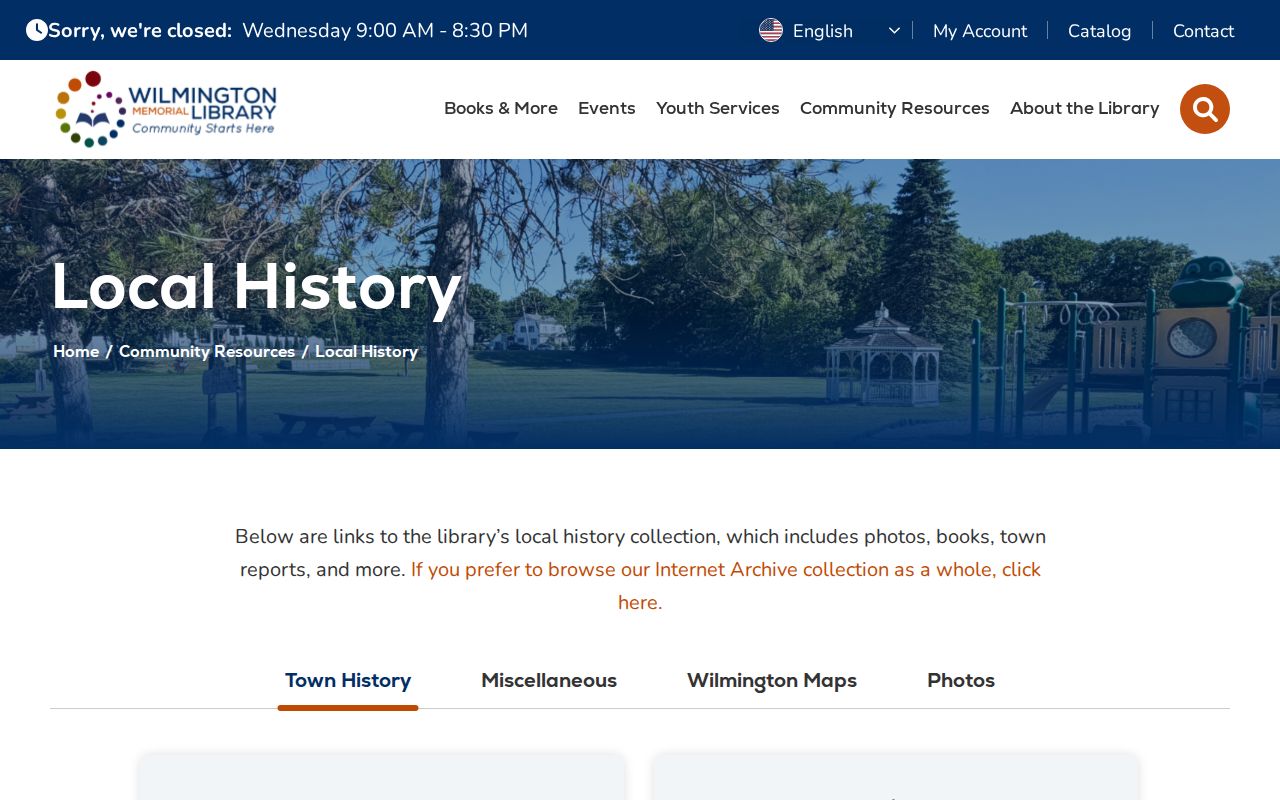
Use its collection labels to choose a record type first, then preserve the source citation with the historical name.
Wilmington Town Report Names
Town reports add dated local context that a printed volume may not supply. The library's report collection includes browse ranges from 1829 onward and later year pairs through 2022. A report can name town officers, assessors, registrars, highway or school committee members, roads, schools, public works, and other municipal activity. It is useful for testing whether a person was an officeholder or committee member in a particular year. It is not a complete household list.
Save the report year and page with every name. The title, not merely the town name, matters because reports may have lists, narrative passages, and project references. A name beside a road project or a committee should be labeled as that role. Do not transform an administrative mention into a home address or a family relationship.
The digitized town-report collection supplies the report-and-persons-listed series used for these checks.
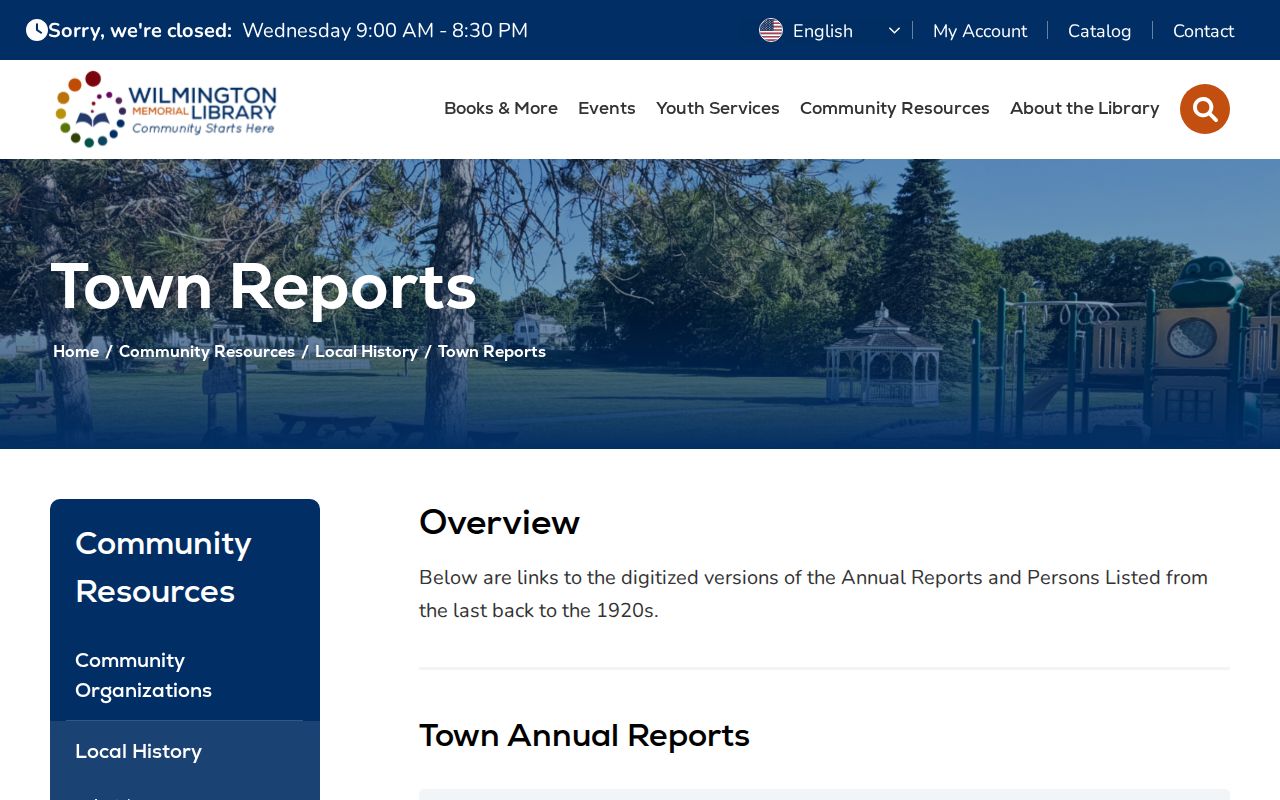
Annual volumes create a useful dated spine for historical names, even where the printed city-directory run is sparse.
Reading Wilmington City Directory Entries
A historical directory entry should be transcribed only as far as the page supports it. The research verified target fields for a 1931 Wilmington directory entry, but not an open, preselected page or a universal publisher key. Capture the printed surname and given name, occupation line when present, street or address line, directory year, publisher, page, nearby entries, and any second household member that appears. Keep the spelling exactly as printed before adding a modern search term in a separate note.
| Printed name | Record surname, given name, initials, and spelling as they appear. |
|---|---|
| Occupation line | Transcribe it only when printed, and identify it as the directory's wording. |
| Street or address line | Keep the printed form and compare it later with a map or deed, not by assumption. |
| Household or business entry | Note a second household member or business connection only if the entry shows it. |
| Owner or renter mark | Record a mark only if the particular volume prints one; no Wilmington symbol or column was verified in the research. |
- Criss-cross directory
- A directory section arranged by street or address rather than by personal name. No Wilmington criss-cross run was verified here, so confirm the volume before relying on one.
- Householder index
- An index organized around a named household. It can help locate an entry but does not prove every person at an address lived there for a full year.
- Abbreviation key
- The volume's own explanation of shortened terms. Photograph or note it before expanding a printed abbreviation.
Wilmington Historical Society Searches
The Wilmington Historical Society Digital Library is a separate discovery layer for historical volumes, photographs, organizations, streets, and local places. At research time its landing page reported 1,933 items, 32 collections, and 3 exhibits. Its search supports keyword, Boolean, exact-match, item, file, collection, and advanced filters. Search a surname, street, organization, and place term separately because the useful detail may be in item metadata rather than a thumbnail.
Place vocabulary can narrow a difficult result without inventing a person connection. Search Middlesex Canal, locks, aqueduct, towpath, basin, station, depot, rail, crossing, Silver Lake, Bond, cracker, or 1864 when the source and date warrant it. The town history records canal work beginning in 1794, railroad arrival in 1835, and the Bond factory's 1864 fire. Those terms help locate historical material; they do not identify a resident on their own.
The Historical Society Digital Library interface shows the collection and filter choices available for a focused Wilmington history search.
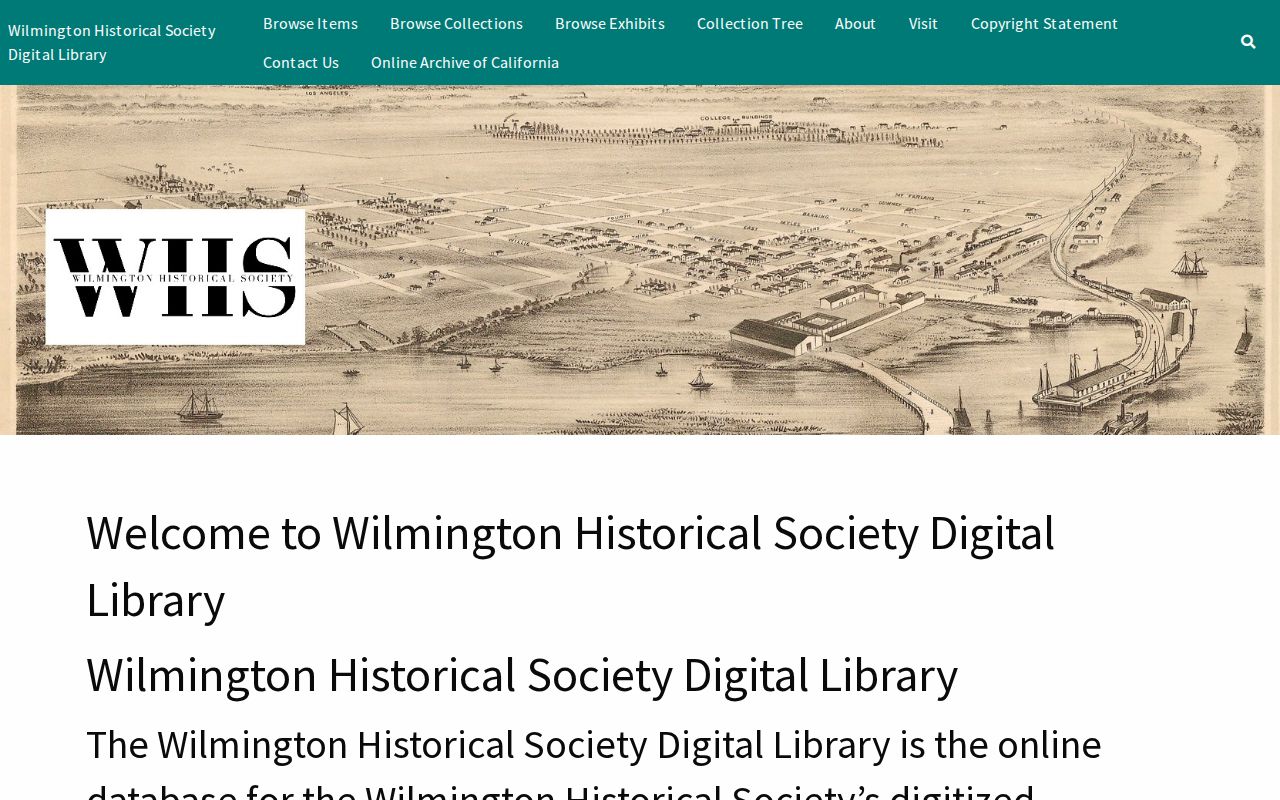
Save the item title, collection, visible date, and access date beside any name or place result.
Sparse Wilmington City Directory Runs
Wilmington's verified city-directory years are useful time slices, not a seamless annual series. The State Library lists 1919 and 1931-1932, while its separate voting-list inventory identifies selected years from 1924 through 2012. The gap between a 1919 volume and a 1931 entry cannot establish where a person lived in between. A person may have moved, died, used a different spelling, appeared under another household, or simply been omitted from the source.
Use a negative result precisely: note the repository, title or index, searched spelling, year, filter, and access date. Then test a town report, the History Index, Town Crier material, historical maps, vital indexes, or a State Library reference request. The Massachusetts Archives digital collections add vital records, censuses, probate, court, military, naturalization, and other historical series, but each has its own dates and access rules.
Note: Never interpolate a residence, occupation, or household relationship across years that the verified collections do not cover.
Wilmington Directory Research Timeline
Historical records change format as Wilmington and its collections change. A short timeline helps place a printed result beside the record system that produced it.
- 1665-1730: Search Woburn, Reading, and Billerica context before Wilmington's incorporation, because early people may appear under a parent-town name.
- 1730: Wilmington was founded from portions of those towns. Town clerk, meeting, tax, church, cemetery, and road records form part of the early local trail.
- 1855 onward: The Middlesex North recorded-land system covers Wilmington, though early Registry books are image-browse material rather than a fully computerized index.
- 1919 and 1931-1932: The State Library inventory identifies these Wilmington city-directory holdings.
- Current digitization: Library reports, local-history tools, and Historical Society collections offer discovery access, while the legal custodian remains the source for certified records.
Tracing Wilmington City Directory Households
Use the printed entry as one dated observation in a household trail. Begin with the known name and approximate decade. A printed address can point toward a map, assessor parcel, or recorded-land search, but a directory occupant and a deed party serve different roles. For current street-level parcel work, use the separate Wilmington streets directory path after preserving the historical citation.
- Search the library history index and Historical Society collection for the name, alternate spelling, and decade. Save each cited source and page.
- Check the verified 1919 or 1931-1932 State Library city-directory holding through its catalog or reference service. Transcribe only what the entry prints.
- Read the town report from the same year to distinguish a household, official, committee, taxpayer, road, school, or civic reference.
- Pair a directory year with the appropriate census or vital index. Historical state census links include 1855 and 1865, while federal census links run through the 1950 public census.
- For a vital event, use the archives index or image within its coverage, then request a certified copy from the lawful custodian only when certification is needed.
A disappearance from a directory is not a conclusion. Keep possibilities separate: a move, a death, a changed spelling, a different household placement, an omission, or a missing volume. The best household timeline names the source and date beside every event.
Wilmington City Directory Evidence Labels
Label the source role before drawing a conclusion. A city-directory entry can be a historical occupant or business reference. A town report can identify an official or committee member. A Registry instrument can identify a grantor, grantee, or recorded owner. A cemetery source can connect names and dates, but does not prove residence at death. The same person can appear in more than one source without each source proving the same fact.
For a citation, preserve the collection name, item or volume title, year, page, search term, role label, URL when applicable, and access date. That record trail is more useful than a broad statement that someone was “in Wilmington.” It also lets another researcher check a changed library interface or a revised portal without guessing which collection was used.